

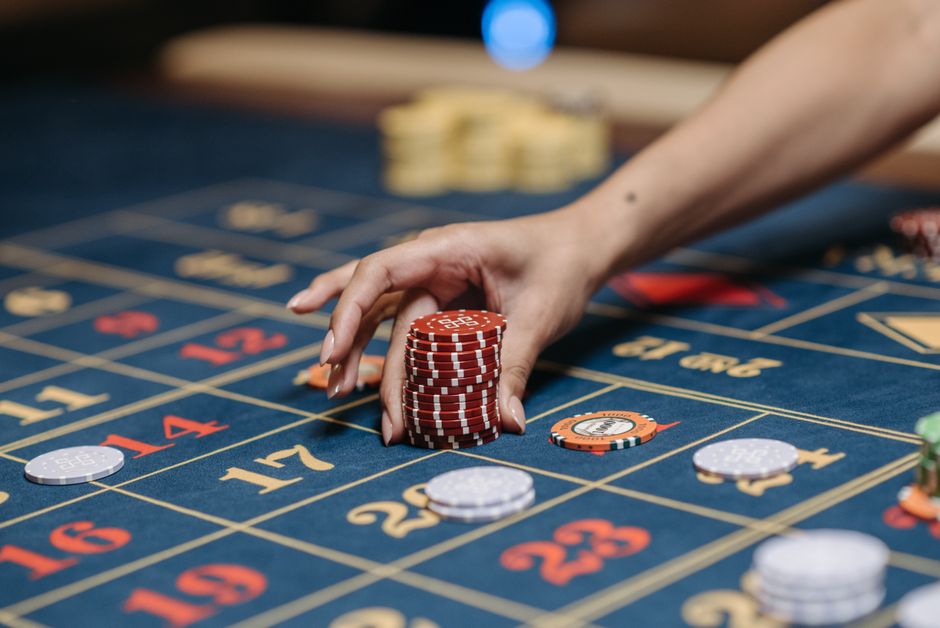
Here's a number that should bother you: according to decades of gambling research, somewhere between 80% and 90% of recreational casino players finish their lifetime as net losers. That's not a scare tactic. It's arithmetic. The house edge doesn't sleep, doesn't tilt, and never goes on vacation. Yet a small minority of players consistently do better than the average punter. Not because they've cracked some secret code, but because they understand something the rest don't: the game isn't rigged against you unfairly — it's just designed to win slowly, and your job is to lose as slowly as possible while having a good time.
That reframe changes everything. Let's talk about what actually separates smart players from the ones funding the champagne fountain.
The House Edge Is Real — Stop Pretending Otherwise
Every game on a casino floor carries a mathematical advantage for the operator. The only variable is how big that advantage is. American roulette runs a 5.26% house edge thanks to that extra double zero. European roulette cuts it to 2.70%. Blackjack with basic strategy can drop below 1% — sometimes as low as 0.5% with favorable rules. Slots are the wild west: they range from about 2% to 15% depending on the machine, the jurisdiction, and whether the operator is feeling generous.
Why does this matter? Because two players with identical bankrolls and identical time at the table can have wildly different outcomes based purely on game selection. If you sit at a 6% edge game for four hours, you're effectively paying a cover charge that never stops. If you sit at a 0.8% edge game for the same duration, that cover charge shrinks by nearly a factor of eight. Same entertainment, radically different cost.
Good players ask about RTP before they ask about anything else. They check the paytable. They look at the rules. It sounds boring. It's also the single highest-leverage habit in gambling.
Slots: Volatility Matters More Than You Think
Here's where most slot players get it wrong. They chase the game with the flashiest graphics or the biggest jackpot number, without understanding two core metrics: RTP and volatility. A detailed guide is available at kingfun.gb.net.
- RTP (Return to Player): The theoretical percentage of all wagered money that gets returned to players over millions of spins. A 96% RTP slot returns $96 for every $100 wagered — theoretically. In the short run, anything can happen.
- Volatility: How the payouts are distributed. Low volatility means frequent small wins. High volatility means long dry spells punctuated by massive hits.
A 96% RTP slot with high volatility can still eat your entire bankroll in twenty minutes if you're betting too big for your balance. That's not bad luck — that's a mismatch between your bankroll and the game's personality. If you're playing on $100, a high-volatility slot at $2 per spin is a coin flip on your survival. The same game at $0.20 per spin gives you hundreds of chances to catch a bonus round.
Practical tip: divide your slot bankroll by at least 200. That gives you a spin size that can absorb a normal dry streak. If that number feels too small to be fun, you're playing above your means — either add to the bankroll or pick a lower-variance game.
Table Games Actually Reward Preparation
Poker and blackjack are the two games where skill genuinely moves the needle. That's why they're worth your time if you're serious about getting more entertainment per dollar.
Blackjack
Basic strategy — a chart that tells you the mathematically optimal play for every hand combination — reduces the house edge to under 1% on most tables. You don't need to count cards. You just need to memorize a grid. That grid is freely available, costs nothing, and will save you more money than any betting system ever invented. Martingale, Paroli, D'Alembert — all of them are decorative. The house edge doesn't care about your progression.
Poker
Poker is unique because you're not playing against the house; you're playing against other players. The rake is your only cost, and it's typically 5% capped at a few dollars. This means a skilled player can genuinely be profitable over the long run. But the skill ceiling is brutal. Position, pot odds, hand ranges, bet sizing, and reading opponents all matter. If you're not willing to study — really study, not just watch highlight reels — you'll be the one funding the table.
The honest truth: most recreational poker players are net losers. The game rewards patience, discipline, and emotional control more than any flashy bluff.
Bonuses and Promotions Are Not Free Money
Every casino advertises a welcome bonus. Very few players read the terms. That's by design.
A typical $1,000 deposit match comes with a 40x wagering requirement. That means you need to wager $40,000 before you can withdraw anything. On slots with a 3% house edge, that's an expected loss of $1,200 — more than the bonus. On blackjack with a 0.5% edge, it's $200, which is actually workable. The games you're allowed to play and their contribution percentages vary wildly, and that fine print determines whether the bonus is a gift or a trap.
- Read the wagering requirement.
- Check which games contribute to clearing it (slots usually 100%, blackjack often 10% or excluded).
- Calculate the expected cost of clearing it based on the house edge.
- If the expected cost exceeds the bonus value, walk away.
Free spins offers are often better because their wagering requirements tend to be lower, but the win caps can be predatory. A "100 free spins" promotion with a $50 max cashout cap is entertainment, not value.
Bankroll Management Is the Only Real Edge
You cannot control variance. You can control how much of it you're exposed to. That's the one honest edge available to every player.
- Set a session budget you can genuinely afford to lose — not a number that hurts, not a number that makes you anxious.
- Set a time limit. Fatigue degrades decision quality, especially in poker and blackjack.
- Never chase losses. The math doesn't reset because you're angry.
- Track your results honestly. If you're down over 50 sessions, that's not a cold streak.
The players who survive long-term are the ones who treat gambling as a paid hobby, not as an income strategy. They know the cost going in, they stay within it, and they leave when the budget runs out.
A Final Thought
Nobody beats the house over infinite time. That's not pessimism — it's math, and pretending otherwise is how people get hurt. But within a finite session, with the right game selection, the right bet sizing, and the right bankroll discipline, you can absolutely get more entertainment, more time at the table, and more genuine value out of every dollar you bring. The difference between a smart player and an average one isn't luck. It's preparation. Do the boring work, and the fun part takes care of itself.


Coding is used in almost all aspects of life and work now, be it directly or indirectly. It’s not just for companies in the tech sector. “An increasing number of businesses rely on computer code,
Coding is used in almost all aspects of life and work now, be it directly or indirectly. It’s not just for companies in the tech sector. “An increasing number of businesses rely on computer code,
Coding is used in almost all aspects of life and work now, be it directly or indirectly. It’s not just for companies in the tech sector. “An increasing number of businesses rely on computer code,