

Start with the great tit's repetitive phrases
The great tit is the ideal bird to begin with because its song is simple, loud and repetitive. Listen for a clear, ringing two-note phrase that sounds like “tea-cher, tea-cher” or “see-saw, see-saw”. The notes are metallic and evenly spaced, often with a slight pause between each repetition. You will hear it from late winter onwards, sometimes as early as January. Great tits have a surprisingly varied repertoire, but this two-note song is their signature. Once you have tuned your ear to it, you will notice it everywhere – from park trees to your own back garden. Their alarm call is a scolding, nasal “churr”, but for identification, focus on the song. A good trick is to whistle the phrase back; if the bird answers, you have got it right.
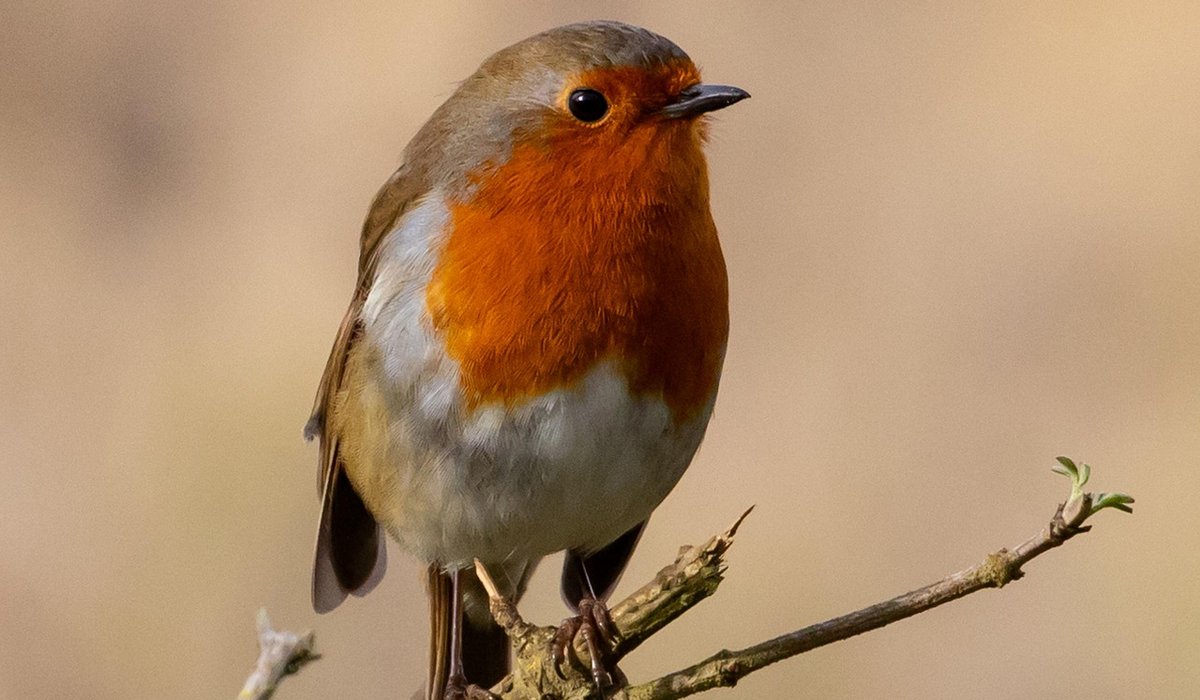
The robin's wistful winter song
The robin sings almost all year round, but its song is most striking in winter when other birds are quiet. It is a thin, high-pitched, wistful sound – often described as melancholy or plaintive. The phrases are varied and rippling, with pauses in between. Robins sing from low perches, sometimes from the ground, and they are famous for singing at night under streetlights. Both males and females sing, which is unusual among garden birds. Listen for the gentle, fluid quality – it never sounds rushed. The robin also has a sharp “tick” call, and a scolding “tic-tic-tic” when annoyed. Do not confuse its song with the dunnock’s, which is faster, higher and more hurried. The robin’s winter song is a gift on a cold morning, so take a moment to enjoy it.
The wren's explosive trill
The wren is tiny, but its voice is astonishingly loud. Its song is a sudden burst of very fast, complex trills and rattles, often lasting just three or four seconds. It sounds like a tiny machine gun of sound, ending with a flourish or a trill. You will often hear it from deep within a hedge or a pile of logs. Despite its size, the wren can be heard from fifty metres away. The song is so rapid that it can be hard to follow, but the sheer energy gives it away. Compare it to the robin: the robin is slow and wistful, while the wren is frantic and mechanical. The wren also has a dry, churring alarm call, like a small stone being rubbed on a comb. In spring, males sing constantly to defend territory. If you hear a sudden explosion of notes from low cover, it is almost certainly a wren.
The blackbird's mellow flute-like notes
The blackbird’s song is one of the most beautiful in the garden. It is rich, mellow and flute-like, with slow, deliberate phrases and clear pauses. You will often hear it from a high perch – a chimney pot, a TV aerial or the top of a tree – especially at dawn and dusk. The tone is low and rounded, never sharp or metallic. Phrases can be varied, but they usually end with a squeaky or creaky note. Unlike the song thrush, the blackbird does not repeat each phrase two or three times; it moves on more quickly. Its alarm call is a loud, sharp “chook-chook” and a harsh rattle when a cat appears. If you hear a rich, fluting melody with long pauses, you are listening to a blackbird. It is worth getting up early just to hear it.
Other common garden voices to know
Once you know the big four, add these to your repertoire:
- Dunnock: a fast, high, hurried song, often described as a squeaky wheelbarrow. It is thinner and more rushed than a robin’s.
- Blue tit: a high-pitched, variable song with a see-see-see introduction and a trill. Often sounds like “tsee-tsee-tsee-churrr”.
- Chaffinch: a loud, confident song that descends the scale and ends with a flourish. Sounds like “chip-chip-chip-cherry-choo”.
- Song thrush: loud, clear phrases repeated two or three times. A master mimic, but the repetition is the giveaway.
- Collared dove: a monotonous three-note coo – “coo-COO-coo”. Often repeated many times.
- Wood pigeon: a five-note coo – “coo-coo-coo, coo-coo” – with a distinctive rhythm.
Each of these has its own character. The more you listen, the more you will separate them without thinking.
Practical tips for learning and remembering songs
Learning bird song is a skill, and like any skill it improves with practice. Here are some practical steps:
- Go out at dawn. The dawn chorus is the best time because birds sing loudly and there is less background noise.
- Focus on one bird at a time. Follow the sound until you see the singer. Connecting the sound to the sight is powerful.
- Use mnemonics. The great tit’s “tea-cher” and the collared dove’s “coo-COO-coo” are easy to remember.
- Record with your phone. Make your own recordings and listen back. You will hear details you missed in the field.
- Use a field guide or a bird song app. Compare your recordings with reliable references. Many apps have quizzes to test yourself.
- Keep a notebook. Note the date, place and song description. Over a year, you will build a personal sound map.
Be patient. Start with the great tit, then add the robin, wren and blackbird. Before long, you will step outside and know exactly who is singing.


Coding is used in almost all aspects of life and work now, be it directly or indirectly. It’s not just for companies in the tech sector. “An increasing number of businesses rely on computer code,
Coding is used in almost all aspects of life and work now, be it directly or indirectly. It’s not just for companies in the tech sector. “An increasing number of businesses rely on computer code,
Coding is used in almost all aspects of life and work now, be it directly or indirectly. It’s not just for companies in the tech sector. “An increasing number of businesses rely on computer code,