

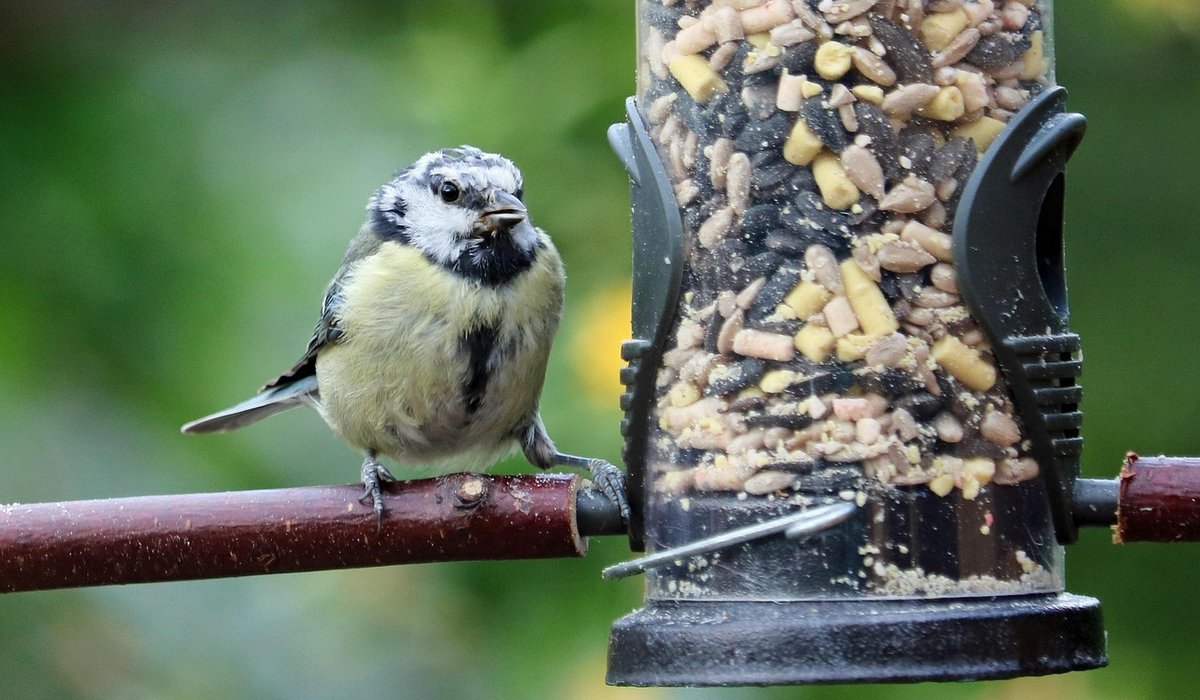
Why the size of the seed matters more than you might think
Watch a blue tit at a feeder for a few minutes and you will see the problem straight away. It picks up a chunk of maize, turns it over, tries to wedge it against the perch, fails, and drops it. A great tit will have a go at a whole peanut, but a coal tit or a goldfinch simply cannot manage it. Small birds have small beaks, and a seed that is too large is not just awkward — it is wasted food, and it makes a mess on the lawn below.
The answer is not to buy more seed. It is to buy the right size of seed. A fine blend of small, soft-coated or husk-free seeds lets a bird swallow a decent mouthful quickly, which matters enormously when there are sparrowhawks about and every second spent faffing with a seed is a second of risk.
What a good fine mix actually contains
A quality mix designed for tits, finches and sparrows should be pale, dry-smelling and mostly made up of seeds you can recognise. Look for these in the ingredients list, and look for them near the top rather than buried at the bottom.
- Sunflower hearts — the single best all-round seed for small garden birds. No husk to remove, high in fat and protein, and taken by almost everything from blue tits to chaffinches.
- Millet — small, round and pale. House sparrows, dunnocks and collared doves adore it, and it is easy for a short-beaked bird to handle.
- Nyjer — tiny, black and oily, the classic goldfinch and siskin seed. Best offered in a dedicated feeder with very fine ports, but a small proportion in a mix does no harm.
- Canary seed and hemp — useful fillers in modest amounts, popular with finches and sparrows.
- Pinhead oatmeal or suet granules — often included in winter blends to lift the fat and protein content.
What to leave on the shelf
The cheapest mixes in a garden centre are cheap for a reason. They are bulked out with large, hard, low-value grains that most small garden birds cannot or will not eat.
- Whole maize — far too big for anything smaller than a jackdaw.
- Wheat, barley and red milo — cheap filler. Some gets eaten by pigeons and pheasants; the rest germinates under the feeder.
- Split peas and dried lentils — often ignored, and they swell when wet.
- Whole peanuts in spring and summer — a genuine risk to nestlings, which can choke on fragments. Use peanut granules instead, and keep whole nuts for a wire mesh feeder in winter.
If you tip a handful of mix into your palm, you should be able to see individual sunflower hearts and millet. If it looks dusty, smells musty, or is full of grey-green grains, put it back.
Matching the mix to your visitors
Different birds arrive with different equipment. Once you know who is in your garden, you can fine-tune what you put out.
- Blue, great and coal tits — sunflower hearts, peanut granules and suet. They will use a hanging feeder or a caged feeder, and they like to grab and fly to a branch to eat.
- Goldfinches and siskins — nyjer in a fine-port feeder, plus sunflower hearts. Nyjer feeders need topping up little and often, as the seed cakes together in damp weather.
- Chaffinches and greenfinches — sunflower hearts from a tray or a hopper with a wide perch. Greenfinches are heavy birds and prefer a solid landing platform.
- House sparrows and dunnocks — millet, canary seed and a little pinhead oatmeal, scattered on a ground tray or a low table in a sheltered spot.
- Robins and wrens — they will take hearts and suet from a ground tray, but they much prefer a bit of cover nearby.
A good compromise for a general garden is a mix that is roughly two-thirds sunflower hearts and one-third millet and canary seed, with nyjer offered separately. That covers the widest range of small birds without leaving half the bag on the floor.
Feeders, trays and simple hygiene
The mix only does half the work. The other half is how you present it.
- Use a feeder with short perches for small birds. Long perches and large ports simply hand the food to starlings and pigeons.
- Add a seed tray or a ground tray beneath the feeder. It catches the spill and gives dunnocks, robins and sparrows somewhere to feed away from the scramble above.
- Clean feeders every fortnight, and more often in warm, damp spells. Hot soapy water, a bottle brush, a rinse, then dry thoroughly in the sun or on a radiator before refilling.
- Rotate feeding stations around the garden through the year. It stops the ground below turning sour and reduces the build-up of droppings and disease.
- Only put out what will be eaten in a day or two. Damp, claggy seed is a breeding ground for mould and bacteria.
A few seasonal tweaks worth making
From October to March, small birds need calories more than anything else, so push the sunflower hearts and suet up and keep the feeders full first thing in the morning — that is when the overnight fat reserves are lowest. In spring and summer, switch to finer seeds, peanut granules, and a dish of live or dried mealworms for growing chicks; a little crushed eggshell or oyster grit on the side helps breeding hens replace calcium.
Get the seed size right and you will notice the difference within a week: less waste on the patio, more birds at the feeder, and a garden that stays busy from first light until dusk.


Coding is used in almost all aspects of life and work now, be it directly or indirectly. It’s not just for companies in the tech sector. “An increasing number of businesses rely on computer code,
Coding is used in almost all aspects of life and work now, be it directly or indirectly. It’s not just for companies in the tech sector. “An increasing number of businesses rely on computer code,
Coding is used in almost all aspects of life and work now, be it directly or indirectly. It’s not just for companies in the tech sector. “An increasing number of businesses rely on computer code,